You’ve probably attended an event or visited a company where things just didn’t work. Guidance was lacking, no one knew the schedule, and confusion reigned in the lobby. This is a nightmare for every company and event organizer. Even if your actual product or program is diamond-standard, the friction caused by unclear information can ruin the overall impression. Customer experience isn’t just about the end result; it’s about the entire journey from stepping in the door to leaving.
Sharing necessary information with customers doesn’t require magic tricks. It can be done stylishly using modern technology, even saving resources in the process. For many companies, the solution might already exist, but it isn’t being utilized effectively enough.
The digital display acts like an efficient customer service representative in your space. It guides, informs and directs your customers to the right place at the right time, tirelessly. In this blog, we will go through how you can harness digital displays to improve customer experience, whether you run an office, a restaurant, or a mass event.
Why does customer experience often fail due to a lack of information?
The biggest enemy of customer experience is uncertainty. When a person steps into a new space, their brain feverishly searches for answers to basic questions: Am I in the right place? Where do I need to go? How long do I have to wait?
If answers aren’t found immediately, frustration sets in.
Traditionally, these situations have been handled either by staff or by taping A4 papers to walls. Both have problems:
- Staff time is expensive: If your receptionist answers the question “Where is the restroom?” 20 times a day, they have used work time that is taken away from something else.
- Paper signs are “blind spots”: Static notices are outdated, even though they are still used in many places. Studies show that people easily ignore static, boring notices. Moving images, on the other hand, attract attention automatically.
When commonly asked questions are clearly compiled on digital signage, finding answers is effortless. Your customers feel constantly “on the map,” which creates a sense of security. Clarity is the new black, and it improves customer satisfaction dramatically.
How to make a digital display a super customer service agent
Instead of wasting employees’ time on routinely repeated guidance, outsource routines to digital surfaces. A digital display is at its best when it anticipates customer needs.
Info screens tell your customer, for example:
- Opening hours and exceptions: “We are exceptionally open until 6 PM today.”
- Guidance: Where necessary facilities, like meeting room ‘Helsinki’ or restrooms, are located.
- Schedules: Who is performing next and in which room?
- Instructions: Where to register, where to leave coats, or which way the queue moves.
- Service offerings: A reminder of what else your company offers (upselling).
When basic information is visible to everyone, your staff can focus on where humans are irreplaceable: deeper service, problem-solving, and genuine encounters.
Explore our various digital signage solutions »
The right message in the right environment
Although digital signage works across all industries, different situations require different content solutions. The placement and content of screens determine how much added value the screen brings to the customer experience. Let’s look at a few examples from different industries.
Restaurants and cafes
In restaurants, visuals are everything.
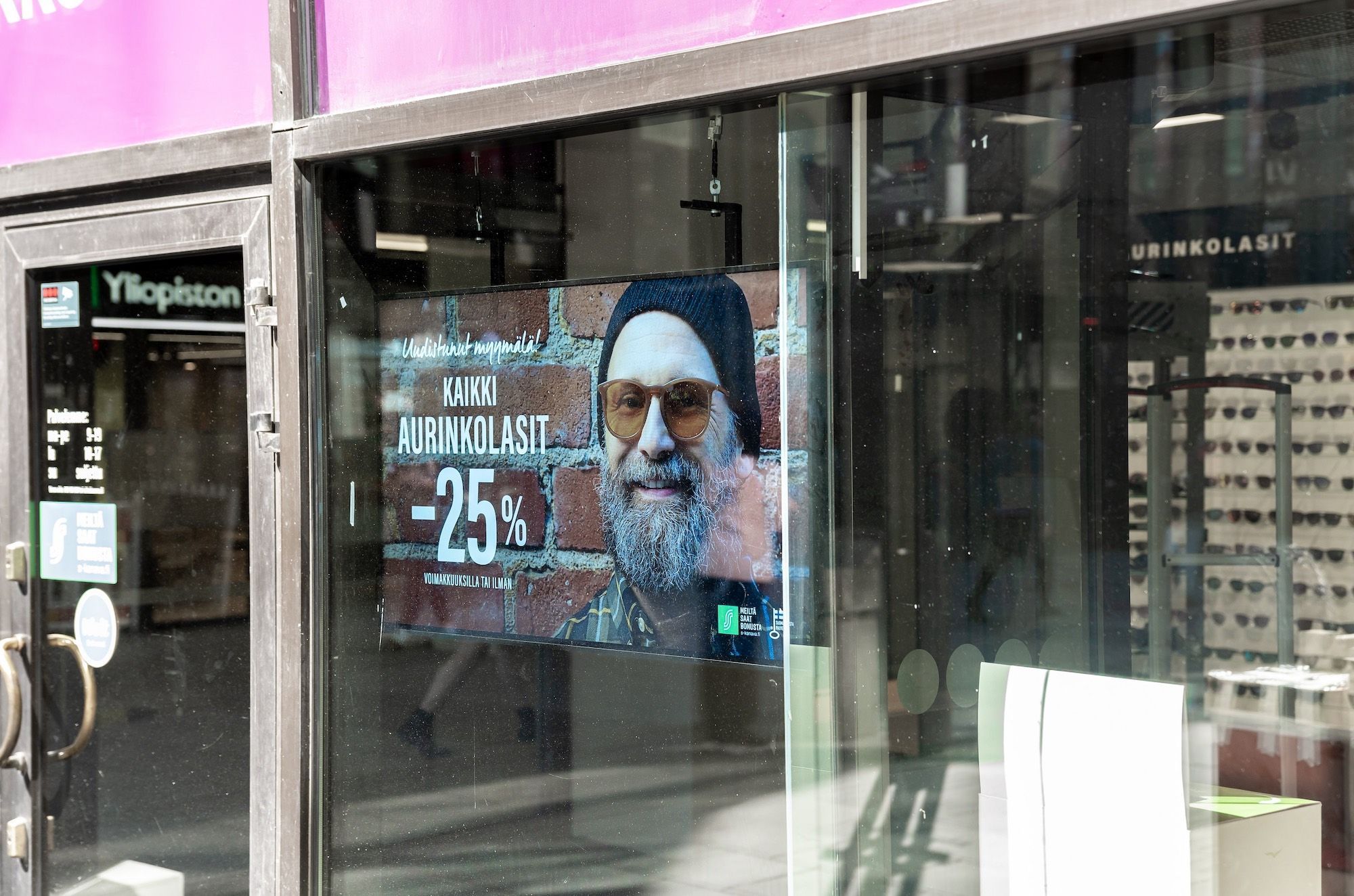
Outdoors: A bright screen (high brightness display) placed in the window acts as a customer magnet. A steaming food image in moving form stops a passerby more effectively than a chalkboard.
Indoors: Digital menus speed up ordering. When a customer sees the lunch list and images of portions while in line, the purchase decision is made by the time they reach the register. This unravels queues and speeds up rotation.
Read more about our solutions to restaurants »
Shopping centers and retail
A screen in a shopping center lobby is like a lighthouse.
Wayfinding: “You are here” maps help customers find the shop they are looking for without wandering.
Path to purchase: Screens placed in corridors can direct customer flows to campaigns: “Just 50 meters away, coffee and bun for €5.”
Offices and lobbies
A first impression is created only once.
Reception: When a visitor steps into the lobby, the screen can welcome them by name (e.g., “Welcome Matti Meikäläinen, your meeting is in conference room 2”). It is a small gesture that elevates the visitor experience to a VIP level.
Internal communication: Digital screens also act as customer service agents for your own employees by informing about internal matters in break rooms and corridors.
Events and fairs
Whether it’s a large convention center or a seminar for a few dozen people, people are often lost without guidance.
Real-time updates: Schedule changes are common at events. In a printed program, a change is impossible, but on an info screen, you tell about a speaker change in seconds.
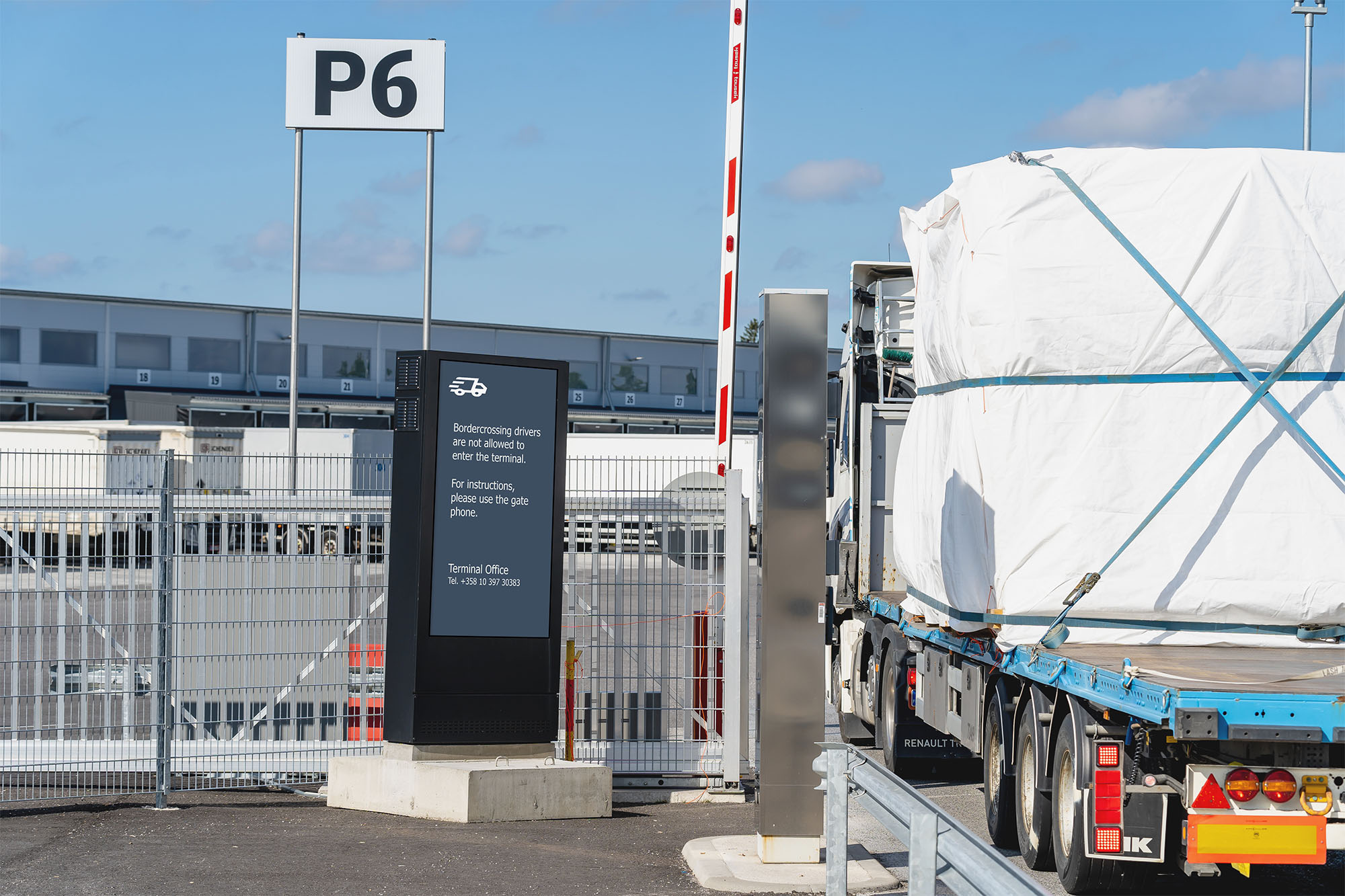
Logistics: Parking instructions, cloakroom location, and lunch times are information everyone looks for.
Read also about our solutions for events and fairs»
Interactivity deepens the customer relationship
Technology has taken leaps forward, and participation has joined passive viewing. Interactive touch screens turn the customer from a passive receiver into an active participant.
This is the “self-service checkout” of customer service: it gives control to the customer.
- Independent transactions: The customer can browse the product catalog, search for route instructions on a map, or register their arrival at the office without having to wait for a clerk to become free.
- Entertainment: In waiting areas, interactive screens can offer entertainment, news, or games. When waiting time is spent doing something, the perceived wait time shortens significantly.
- Wow effect: Interactive content that looks like your brand leaves a strong memory trace. It communicates that your company is modern and customer-oriented.
Read also: Interactive digital signage attracts attention »
Smart automation handles updates for you
Many entrepreneurs fear that a new communication channel brings more manual work. “Who has time to create content and update it?” This worry is unnecessary, as modern digital signage does not require constant manual work. Although remote management of screens via cloud service is already the industry standard, the biggest saving of time and effort nowadays comes from content automation.
In practice, this means that the digital screen fetches the information to be displayed automatically from systems you already use. When information updates in the original source, whether it is a website, ERP system, or social media, it updates in real-time on the screen too.
You can harness automation as your customer service agent, for example:
- Social media: Bring Instagram or LinkedIn posts directly to the screen. This keeps the content visual and alive without separate updating.
- Traffic and News: Make the customer’s journey home easier by showing real-time bus schedules (e.g., HSL) or taxi availability on the lobby screen.
- Data visualization: Bring figures and goals in internal company communication into view directly from BI tools or the intranet.
- Event calendars: Connect meeting room or event space screens directly to the calendar system, so “Free / Occupied” information is always up to date.
When you utilize integrations, your display comes alive and serves the customer with fresh information even when you are focused on other tasks. The content remains relevant and interesting, and last week’s lunch menu is never displayed on the screen.
Read also a blog: What does digital signage cost? »
Summary: Customer experience is sum of small things
It is easy to do things as before, but often it is no longer enough. Competition for customer attention and loyalty is tough. The winners are those companies that make doing business easy, smooth, and pleasant.
Digital signage is an investment that pays itself back in more satisfied customers, freed-up work time, and a more modern brand image.
Do you want to improve your customers’ experience from the moment they step in the door? Contact us, and our experts will help you brainstorm and find the digital signage customer service agent suitable for your space.