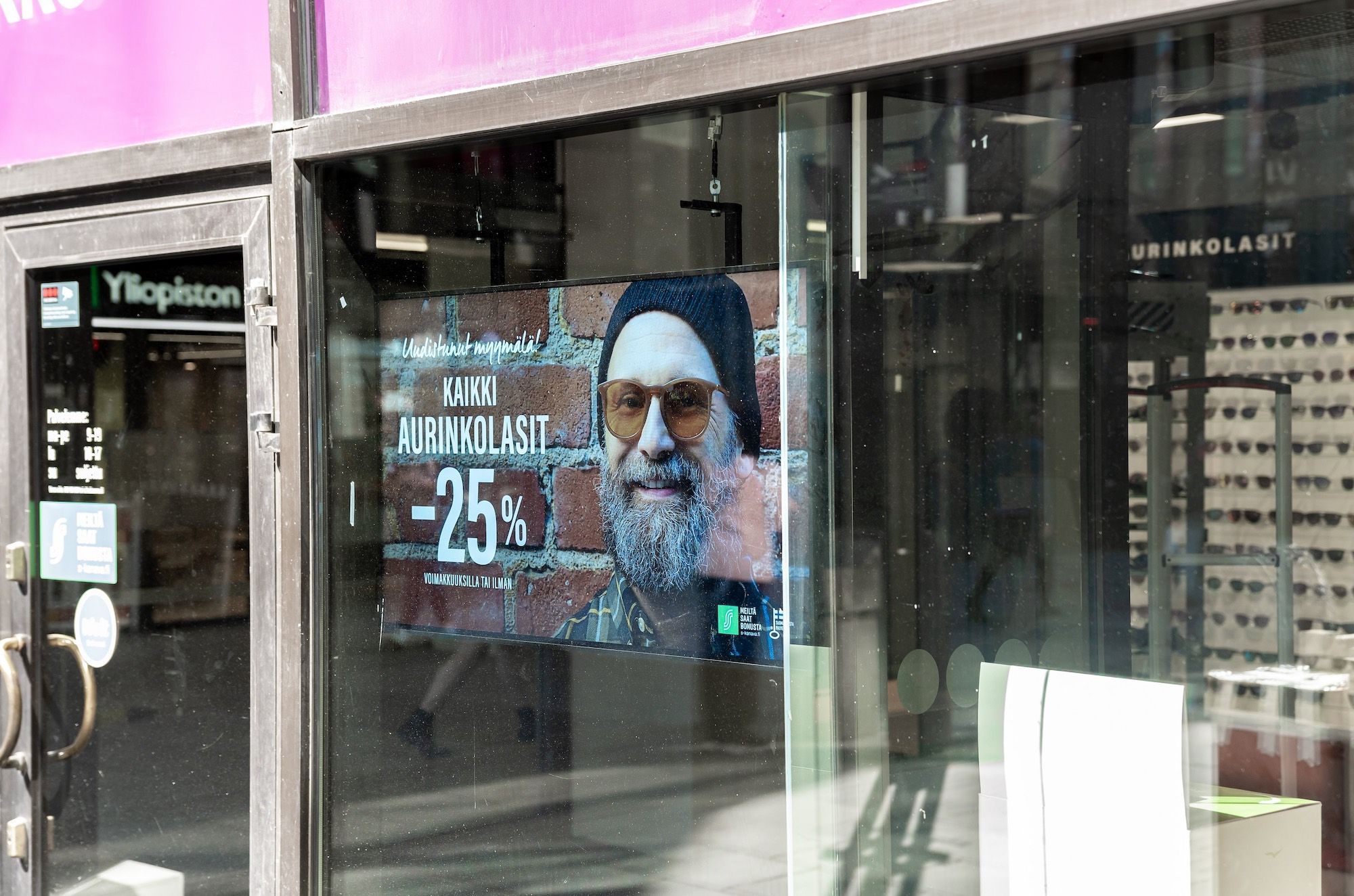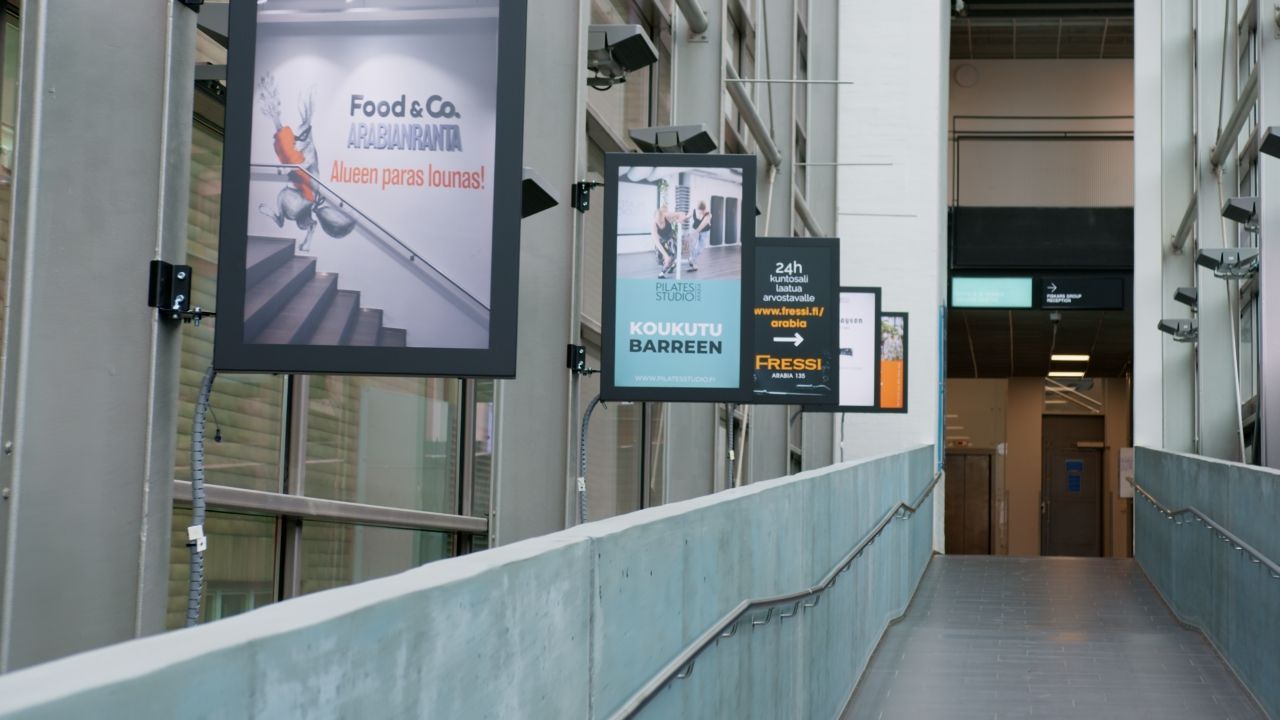
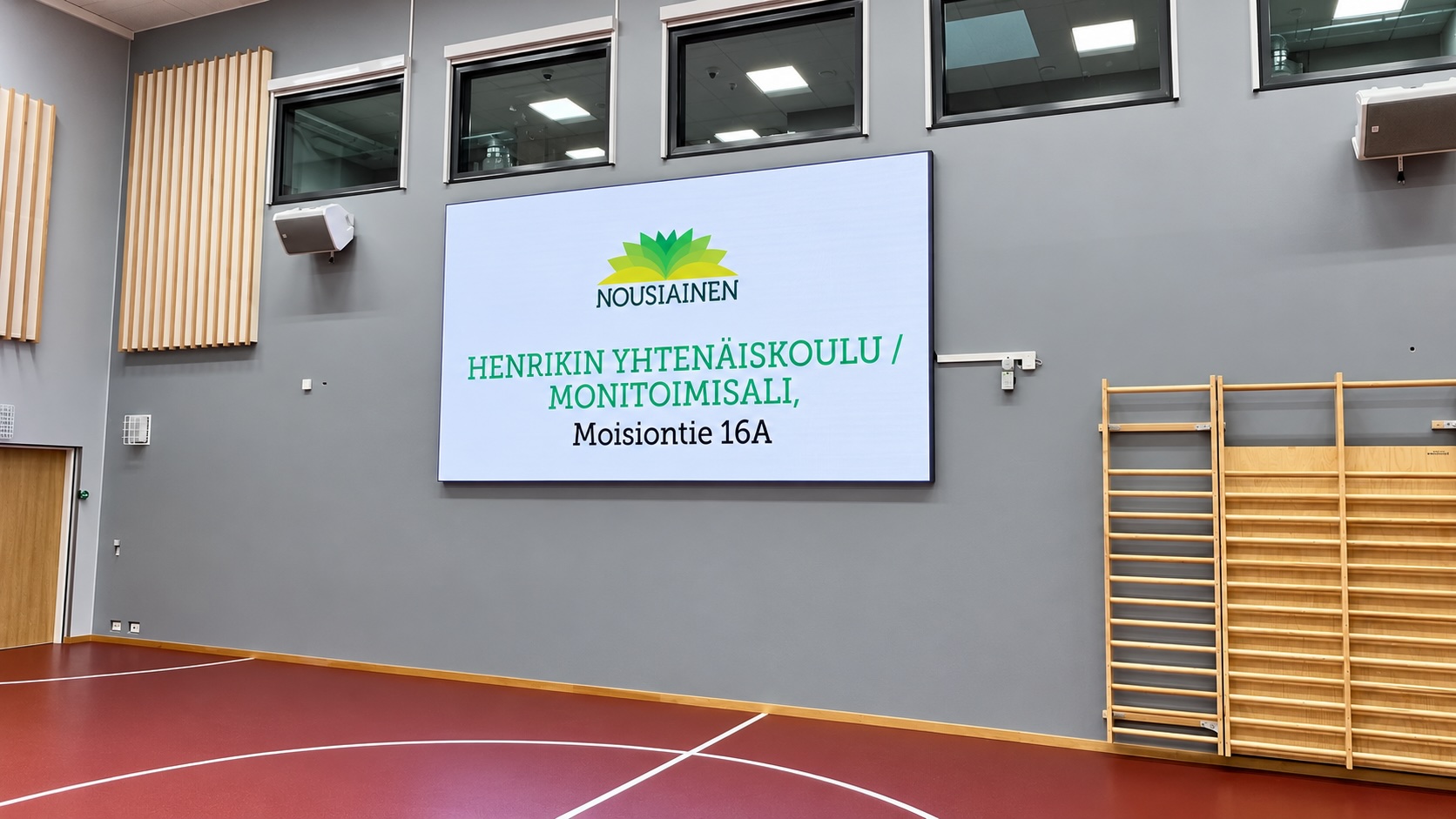
In a company lobby, you want a brand video the width of the whole wall. In a store, the campaign should be visible from the entrance. In a meeting room, you need a large image where spreadsheets and small text are still legible.
An LED display can do all of these, but each asks something different of it. In the lobby, size and impact matter most; in the store, placement and content; in the meeting room, sharpness.
So choose an indoor LED display based on what it will show and where it will be viewed from. In this article we go through which indoor spaces suit an LED wall, when a standard digital signage display makes more sense, how to choose pixel pitch and brightness, and what an indoor LED screen costs.
In short: an LED wall is worth it when the display surface needs to be large, bezel-free or shaped to fit the space. A standard digital signage display is enough when the content is read from fairly close up and fits the shape of a normal screen. Installed, a lobby- or retail-class indoor LED costs about €1,900–4,800 per square metre, excluding VAT.
What is an indoor LED display?
On an LED display, the image is made up of light-emitting diodes. The surface is built from modules, so its size and shape can be fitted to the space. The result might be a wide surface behind a reception desk, a tall display at a store entrance or a large video wall in an event space.
Standard digital signage displays range from small 10″ screens up to large ones of as much as 100″. They are Full HD or 4K displays. They can also be combined into a video wall, but only an LED display gives a completely seamless surface.
The sharpness of an LED display depends on the pixel pitch – the distance between neighbouring pixels. The smaller the pixel pitch, the closer you can view the image without individual pixels standing out. So LED doesn’t automatically mean a sharper picture than a standard digital signage display: sharpness depends on the pixel pitch chosen and how close people view the screen.
Read also: LED display price and other questions buyers ask »
Where does an indoor LED display work best?
In a store, the campaign has to be visible from the right spot
In a store, an LED display works especially well as a large campaign or brand surface. It can showcase new products, show products in use or create the atmosphere you want.
Before choosing the display size, walk the customer’s route yourself. Where does the display first come into view? Does the customer stop in front of it or walk past? What should they have time to notice?
In a lobby, an LED wall can be part of the interior design
In a lobby, the advantage of an LED display is that the surface can be fitted to the proportions of the building. A wide installation can be built behind reception without the design being dictated by the aspect ratio of a standard screen.
The display can present the company’s work and customer stories, show brand videos or run calm visual content. It doesn’t have to fill the whole lobby with movement and light. The right brightness and pacing help it blend into the space.
If the main job is showing visitors timetables, wayfinding or a lot of text, a standard digital signage display may be the better fit.

In meeting and event spaces, content dictates the resolution
In a large meeting or event space, an LED wall gives you a big, bezel-free image. When choosing the display, though, you need to know whether it will show videos and large images or detailed spreadsheets as well.
A brand video can look great at a resolution where the small numbers in a spreadsheet are hard to read. So evaluate a meeting room display with your own presentation material and from the closest real viewing position.
Read also: Nouste Arena: digital signage as part of municipal marketing »
LED wall or a standard digital signage display?
Approach the choice through what you need the display to do:
- A large brand video or visual surface: an LED wall is a strong option.
- Announcements, price lists and timetables read from close up: a digital signage display is usually the natural choice.
- An unusual size or shape: LED’s modular structure gives you more design freedom.
- Several small displays around the space: digital signage displays are the more sensible starting point.
You can use both on the same site. A store can have a large LED surface at the entrance and smaller digital signage displays in the product areas. The display technology doesn’t have to be the same everywhere, and the content on all the displays can be managed in the same MediaCloud.
How to choose the right display for an indoor space
Start with viewing distance, not pixel pitch
Don’t choose pixel pitch on the basis that a smaller number means a sharper picture. A denser display costs considerably more, and the extra sharpness doesn’t always pay off. First find the closest spot from which the display will actually be viewed. Then think about whether viewers need to read small text or take in a big picture.
You can get a rough estimate by calculation: multiply the pixel pitch in millimetres by 3,438 and divide by a thousand to get the distance in metres at which the pixels blend into a seamless image. A comfortable viewing distance is about half of that.
The viewing distances are indicative. The right pixel pitch also depends on the level of detail in the content and the resolution you want.
| Pixel pitch | Image blends | Comfortable viewing distance | Example use |
|---|---|---|---|
| P1.2 | approx. 4 m | approx. 2 m | meeting room, studio |
| P1.5 | approx. 5 m | approx. 2.5 m | lobby, reception |
| P1.8 | approx. 6 m | approx. 3 m | store campaign wall |
| P2.5 | approx. 8.5 m | approx. 4.5 m | large lobby, shopping centre walkway |
| P4 | approx. 14 m | approx. 7 m | sports hall, event space |
Ask to see a similar display running your own content. That makes it much easier to judge sharpness than a technical table does.
Decide size, resolution and aspect ratio together
The physical size of an LED wall alone doesn’t tell you how sharp the image is. An LED wall’s resolution isn’t automatically Full HD or 4K – it is determined by the size of the surface and the pixel pitch. An LED wall with an exact Full HD resolution can also be built.
Decide the aspect ratio before producing content, too. If you have a lot of ready-made 16:9 video, the same aspect ratio makes it easier to use. A wide, low surface can suit a space beautifully, but it needs content designed for it.
So agree already at the planning stage what format materials will be produced in and who is responsible for fitting them to the display.
Match brightness to the lighting in the space
The right maximum brightness depends on the lighting in the space and where the display is placed. Near windows you usually need more brightness than in a dim lobby. A picture that’s too dim looks washed out in a bright space, but a surface that’s too bright is tiring to look at indoors. In any case, a display isn’t normally run at maximum brightness all the time.
Besides maximum brightness, find out how well the display performs at low brightness and whether it adjusts automatically to the lighting. Final adjustments are made at commissioning, in the actual conditions of the space.
Leave room for maintenance
How much space you need behind and around the display depends on its structure and how it is serviced. A front-serviceable LED display can be maintained from the viewing side, which makes it easier to recess into a wall, for example. A rear-serviceable structure needs service space behind the display.
Planning should also take into account load-bearing capacity, power supply, ventilation and cabling. If the display is going into a meeting room or another quiet space, also check the noise from any cooling fans.
A modular LED wall doesn’t usually come with built-in speakers. If your content includes sound, plan the audio as part of the installation too.
Plan content and management before installation
A large display surface needs content that works at exactly that size and in that place. The same material won’t necessarily serve both a campaign display at the entrance and a calm reception lobby.
Agree before go-live who creates the content, who approves it and how often it is updated. Prepare the first materials in good time, too, so the display can go into use straight after installation.
In FirstView MediaCloud, content for LED displays and other digital signage displays is managed from one place. Campaigns can be scheduled in advance, content shared across locations and access given to the people responsible for communications in their own area.
Read more: Digital signage content management »
What does an indoor LED screen cost?
The price of an indoor LED display depends above all on the size of the surface, pixel pitch, structure and installation site.
For lobby and retail displays (P2.5–P4), the hardware costs about €1,500–2,500 per square metre, and for displays designed for close-up viewing (P1.5–P2) about €2,500–4,500 per square metre, excluding VAT. Installed, a lobby or retail display comes to about €1,900–4,800 per square metre.
The price per square metre alone doesn’t tell you what the finished installation will cost, though. On top of the hardware, budget for the mounting structure, installation, electrical and network work, content management and maintenance. The estimate becomes more precise once the location, size and viewing distance are known.
Dig deeper: LED display price guide and indicative prices »
Frequently asked questions
An LED wall is worth it when you need a large, bezel-free display surface or a size and shape fitted to the space. A standard digital signage display is usually more cost-effective for smaller needs and content read from close up, such as announcements, price lists and timetables.
It depends on the closest viewing distance, the content and the size of the display. Small text read from close up needs a finer pixel pitch than a campaign video viewed from further away.
A video wall is built from several displays that together form a wall of the size you want. Video wall displays have thin bezels whose seams remain visible, so for a completely seamless surface you need an LED display. LED is also built from modules that can be arranged more freely, for example as part of the interior design. For smaller sites, a video wall usually works out cheaper.
Yes. MediaCloud content management isn’t tied to the display technology, so a site’s LED wall and digital signage displays can be controlled from one view, scheduled in advance and share content across several locations.
It depends on the structure. A front-serviceable display is maintained from the viewing side, so it can be installed close to the wall. A rear-serviceable structure needs access space behind the display, and that space has to be reserved at the planning stage.
Yes, and it’s a common solution in stores. If the display faces outwards, it may fall under the rules for advertising devices, which can mean permit requirements and night-time brightness limits. Check how the municipal building control interprets it before you order.
For lobby and retail displays, the hardware costs about €1,500–2,500 per square metre and the installed whole about €1,900–4,800 per square metre, excluding VAT. The final price depends on pixel pitch, mounting structure, electrical work and content management.
Shall we plan the right LED display for your space?
A good installation starts from the space and the content. Tell us where the display will go, where it will be viewed from and what content you want to show. We’ll help you work out the right size and pixel pitch – and whether the space is best served by an LED display, a video wall or a standard digital signage display.